The United States is a Rogue State. Break Free Now.
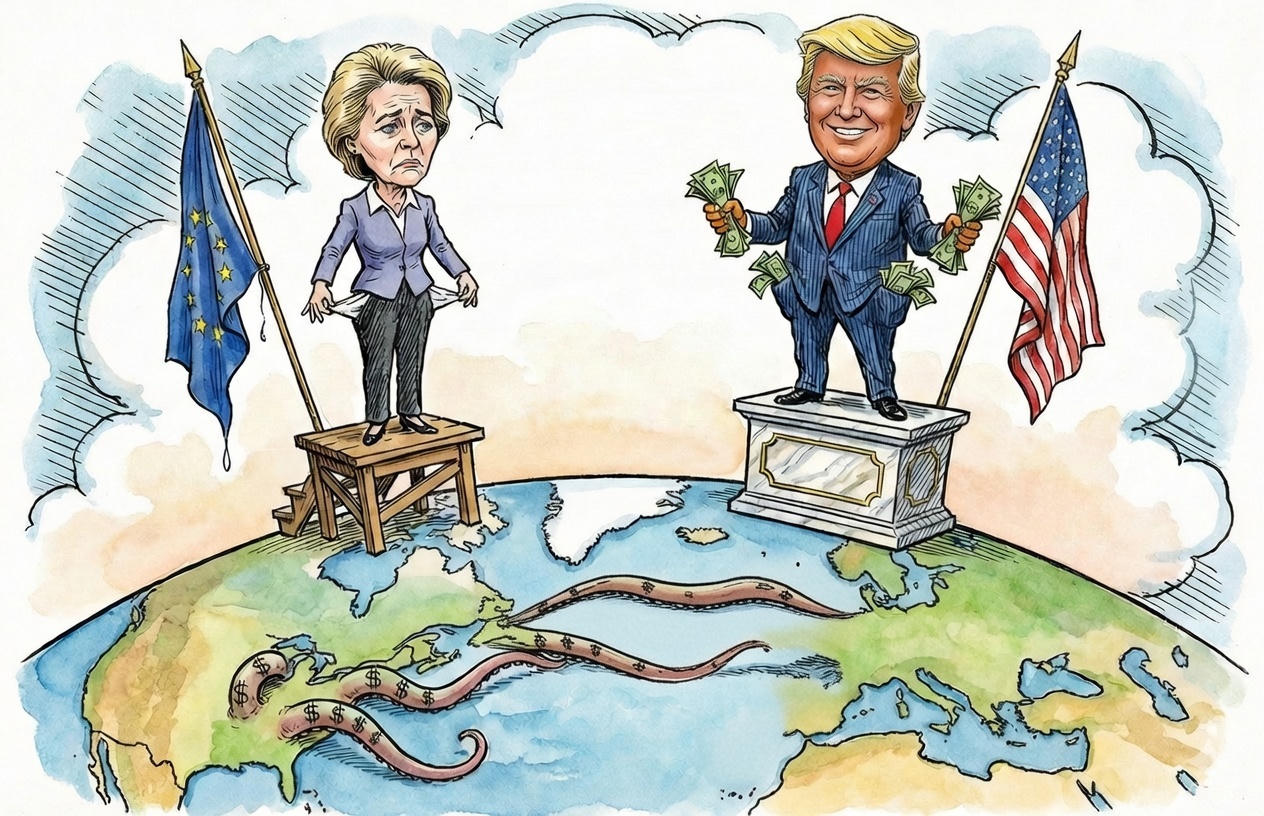
In the early hours of January 3rd, US President Donald Trump did something that many have foreseen for a while, but few dared to say out loud: He invaded Venezuela, in clear violation of international law, launched several airstrikes, and ordered US Special Forces to abduct Venezuelan President Nicolás Maduro and his wife Cilia Flores.
In his speech following the operation, he made clear that Venezuela will “temporarily be run by the US” and they will “tap its oil reserves and sell them to other nations”, while justifying his actions by calling them “law enforcement” for which he has “inherent constitutional authority”. Lawlessness disguised as legality – a recurring theme throughout Trump’s second presidency.
Don’t get me wrong: Maduro is a dictator, an autocrat, and has done nothing to improve the lives of the Venezuelan people. For all intents and purposes, Venezuela is better off without him.
However, striking any foreign country and abducting its leader is a kind of escalation that should not be taken lightly in any case. It’s the culmination of a year of increasingly aggressive and hostile behavior by the Trump administration and should be the final straw that convinces even the last skeptics that the United States has become a rogue state – ironically, a term the US has coined.
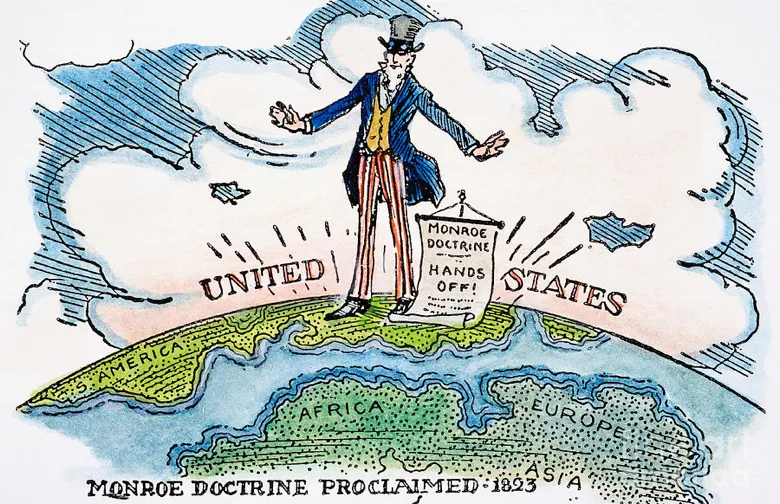
A few weeks before tensions began rising between the US and Venezuela, Trump publicly declared that his administration would bring back the Monroe Doctrine, a foreign policy established two centuries ago by former US President James Monroe. Back then, the Monroe Doctrine declared that the United States would not tolerate any further European colonization of the Americas and that any future colonization would be met with military force.
In a strategy paper released at the beginning of December, Trump’s administration declared the Western Hemisphere to be Washington’s sphere of influence, while questioning whether Europe should still be considered an ally. It’s the latest in a series of rhetorical attacks on the post-World War II order and re-establishes Trump’s “America First” policy.
Why Europe Remains Silent
Even before assuming office for the second time, Trump repeatedly threatened to take control of foreign countries and resources – most prominently, Greenland, a territory of NATO ally Denmark. Even then, European leaders were hesitant and either responded diplomatically or not at all. One might think that Europe would like to have a say in what happens to their territory, but even as Trump makes his threats more concrete in Venezuela, Europe… does nothing. Why?
The reality is that Europe is not able to do anything about it. At this point, the US can afford to do whatever they want without fearing any consequences from their European “allies”. Since the end of World War II, Europe has become increasingly dependent on the US for military protection, trade, and its complete infrastructure.
Several ICC officials, including chief prosecutor Karim Khan and judge Kimberly Prost, have been sanctioned by the US government for their involvement in investigating Israeli officials and issuing arrest warrants against them, such as Prime Minister Benjamin Netanyahu and Minister of Defense Yoav Gallant for their war crimes in Gaza. With the snap of a finger, many of them were unable to access their bank accounts, office software and cloud services, or even use their smart home assistants.1
While we Europeans have talked a lot about Digital Sovereignty over the past year, not much has happened on that front. Europe seems to be stuck. Excessive bureaucracy and a general lack of urgency has left our continent in a state of paralysis, unable to act quickly and decisively, as the situation would require.
It’s frustrating, but officially condemning recent US actions or even imposing sanctions would mean we’d be risking not only an economic crash, but also a near-complete shutdown of all European infrastructure. The most pressing problem in Europe today is to break free from and become independent of the US and its companies. This, however, will take time: Before we can even think about building our own digital infrastructure, we’ll need to fix our excessive bureaucracy, fragmented markets, brain drain to the US, anti-VC policies, and so on. Until then, all we can do as the European Community is to watch from the sidelines and do damage control.
However, you as an individual or business can make your voice heard today. Not only does grassroots demand increase the supply of alternatives in a free market and reduce the amount of collective leverage US big tech have against us, it’s also becoming increasingly important to make yourself resilient against political outcomes. We don’t know yet how the US will look post-Trump. And at that point, it may even be too late.
Your Data, Their Data
So far, we’ve established that the United States, a rogue state, arguably at the brink of becoming an autocracy, has ultimate control over the digital infrastructure of the world. But why should you, as an individual, care?
Since Trump assumed office again, arbitrary detentions at US immigration have become more common. It is well known at this point that immigration officials have been directed to review social media posts for “hostile attitudes” towards the United States. This includes seemingly trivial things like pro-Palestinian opinions, which a free democracy should be able to tolerate.
Your public social media activity is likely not the only thing immigration officials can see, however. Mass surveillance capabilities exist regardless of political targeting. An essay you’ve written for university a few years ago in Microsoft Office, an email you’ve sent through your Gmail account, a note in your cloud-based notetaking software. They all have one thing in common: According to the 2018 CLOUD Act, the US government can compel all US companies to hand over any data they have stored on any person. Additionally, the Foreign Intelligence Surveillance Act (FISA) allows for warrantless, absolute surveillance of all non-US persons.
This is not limited to data stored on US soil. Even if your email provider boasts “European Data Residency”, storing data in European data centers only, the US government can still compel them to hand over any data stored on those servers. US companies are in a catch-22 between European privacy laws and US mass surveillance laws. As US companies however, US laws override European ones. The European Court of Justice (ECJ) has ruled US data protection inadequate multiple times already. Most prominently rendering the so-called “Privacy Shield” which European companies used to facilitate data transfer to the US as invalid. Yet, nothing really changed: More regulatory gaps and loopholes have been found and your data is still being transferred to the US.
What You Can Do
In conclusion, breaking free from US big tech isn’t simply about personal privacy – it’s a collective obligation to secure our free, democratic way of living, independent of foreign hostile actors.
Breaking free doesn’t mean going off-grid or throwing all your tech out overnight. It’s about reducing your exposure to a single (political) point of failure. Think of it as diversification: you wouldn’t put all your savings in one bank in a foreign country, so why put all your data there?
Start with the highest-value targets. Your email is the master key to your digital life. It’s how you reset passwords, receive sensitive documents, and talk business. If a US company can lock you out of your email, chances are, your very existence is in danger. Luckily, this is also one of the easiest areas to break free from the US. European providers like Proton, or Mailbox.org offer end-to-end encryption and operate under Swiss or German jurisdiction, outside the reach of the CLOUD Act.
Next, consider where your files live. If your contracts, medical records, or business documents sit in Google Drive or iCloud, they’re accessible to US authorities without your knowledge. Alternatives like Proton Drive, Tresorit, or even self-hosted options like Nextcloud for the more technical people put you back in control.
However, let’s be honest: There are trade-offs. European alternatives are often less polished, less integrated (for good reason!), and require more effort to set up. Yes, the seamless sync between your iPhone, MacBook, and Apple Watch is convenient. And yes, they don’t have true equivalents in the decentralized, privacy-focused world, using operating systems such as GrapheneOS and Linux. However, that convenience carries both personal and political risk. The question isn’t whether the alternatives are as good; it’s whether the trade-off is worth it given what’s at stake.
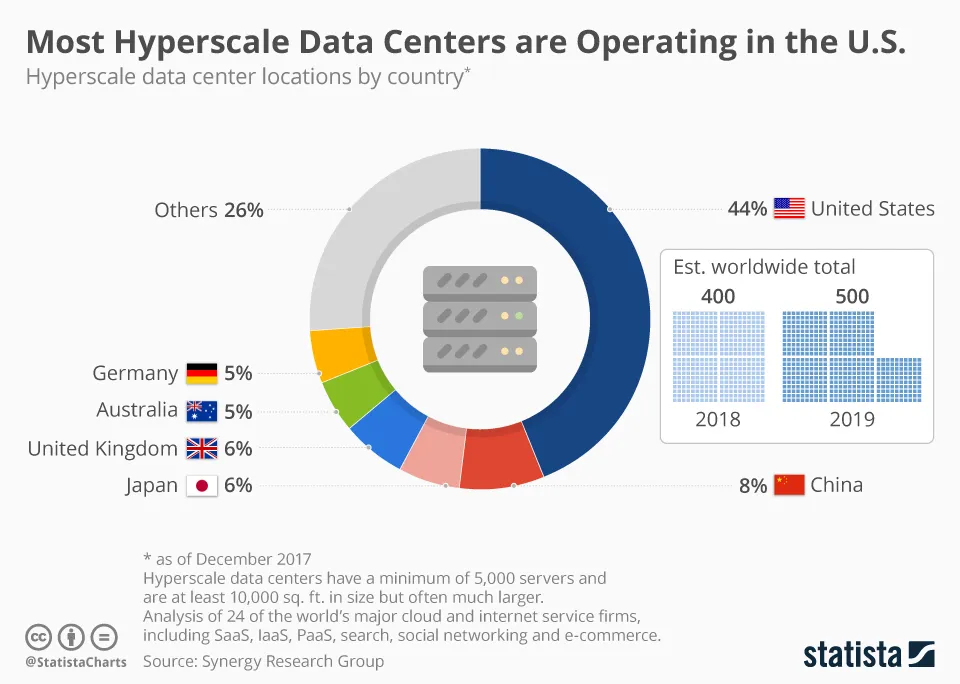
Also, you have to admit you can’t fully escape. US companies like Amazon Web Services, Cloudflare, and Microsoft Azure form the backbone of the World Wide Web. Even many “truly” European services, from European companies, host their services on those hyperscalers. Nearly 50% of all hyperscale data centers are located in the US – and most of the data centers located elsewhere are at operated by US companies.
True digital sovereignty requires infrastructure that Europe hasn’t built yet and is likely decades away from building. But reducing your direct dependencies still matters. It limits your personal exposure, sends a demand signal to European companies building real alternatives, and chips away at the leverage US big tech hold over all of us.
The World After
The United States has crossed a line that cannot be uncrossed. Whether you believe the invasion of Venezuela was justified or not, it’s about the precedent this sets. The US will act unilaterally, violate international law when convenient, and face no meaningful consequences. For Europeans, the lesson is clear. We cannot rely on American institutions, political or corporate, to act in our interest, or even to remain stable. The transition away from US dependency will be slow, messy, and it’ll likely hurt. But it must start somewhere, and it must start now. Every individual who moves their email, every business that migrates their infrastructure or builds alternatives, every government that funds those alternatives – these are acts of sovereignty and true Pan-Europeanism.